
All MCP Servers Complete list of MCP server implementations, sorted by stars

This project provides a FastAPI-based asynchronous API server designed to communicate with Model Context Protocol (MCP) servers. It enables users to list available MCP servers, list tools provided by these servers, and invoke specific tools. The server is built with Python and includes features like Docker support and interactive API documentation via Swagger UI and ReDoc.

VRChat MCP OSC provides a bridge between AI assistants and VRChat using the Model Context Protocol (MCP) and Open Sound Control (OSC). It allows AI assistants like Claude to control avatar parameters, send messages, and respond to VR events in VRChat. The project offers seamless integration with VRChat, enabling advanced AI-driven interactions in virtual reality environments.


This project provides a minimal Message Control Protocol (MCP) server that integrates Anthropic's 'think' tool into Claude AI. The 'think' tool allows Claude to pause during response generation to consider whether it has all necessary information, improving complex problem-solving and policy adherence. The server runs as a standalone process, registers the 'think' tool, and returns structured responses for AI assistants to process. It is particularly useful for tool output analysis, policy-heavy environments, and sequential decision-making.


The BrasilAPI MCP Server is a Model Context Protocol (MCP) implementation that enables seamless querying of BrasilAPI's extensive datasets, including postal codes, area codes, banks, holidays, and taxes. It enhances AI applications by providing a unified interface to access and utilize this data, supporting integration with various clients and LLMs. The server is built with TypeScript and offers tools for development, debugging, and deployment via Docker.
The Perplexity Ask MCP Server integrates with Perplexity's API to provide web search capabilities directly within the Model Context Protocol (MCP) ecosystem. It allows users to perform web searches without leaving the MCP environment, enhancing the functionality of AI applications by providing seamless access to external data sources.

This repository provides a straightforward tutorial on building MCP servers using .NET and C#. It includes step-by-step guidance and a basic implementation to help developers understand the fundamentals of MCP server creation in the .NET ecosystem.

This MCP server provides a lightweight solution for ODBC interactions using FastAPI, pyodbc, and SQLAlchemy. It supports fetching schemas, tables, and detailed table descriptions, as well as executing stored procedures and queries. It is compatible with Virtuoso DBMS and other SQLAlchemy-supported databases, offering JSONL and Markdown table formats for query results.

The FastMCP Documentation Search Server provides a unified interface for AI systems to intelligently search across multiple popular framework and library documentations. It supports frameworks like Next.js, Tailwind CSS, Framer Motion, and more, with features such as smart name resolution, asynchronous processing, and robust error handling. This tool ensures efficient and accurate retrieval of relevant documentation for AI models.

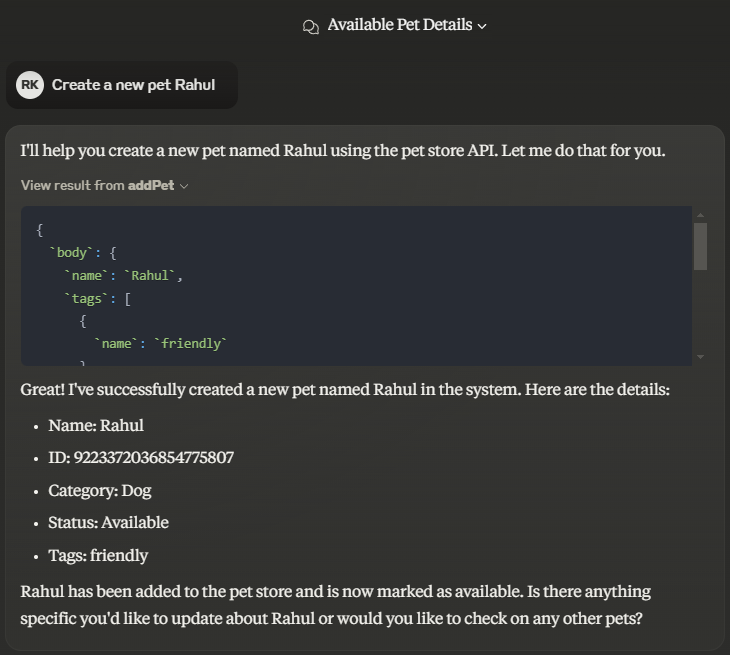
The OpenAPI Model Context Protocol (MCP) Server is designed to facilitate interactions between Large Language Models (LLMs) and REST APIs. It provides a structured way for LLMs to perform HTTP API calls (GET/PUT/POST/PATCH) based on prompts. The server supports configuration through environment variables, allowing users to specify OpenAPI documents, API base URLs, and other parameters. It also includes features like white-listing and black-listing specific API operations.

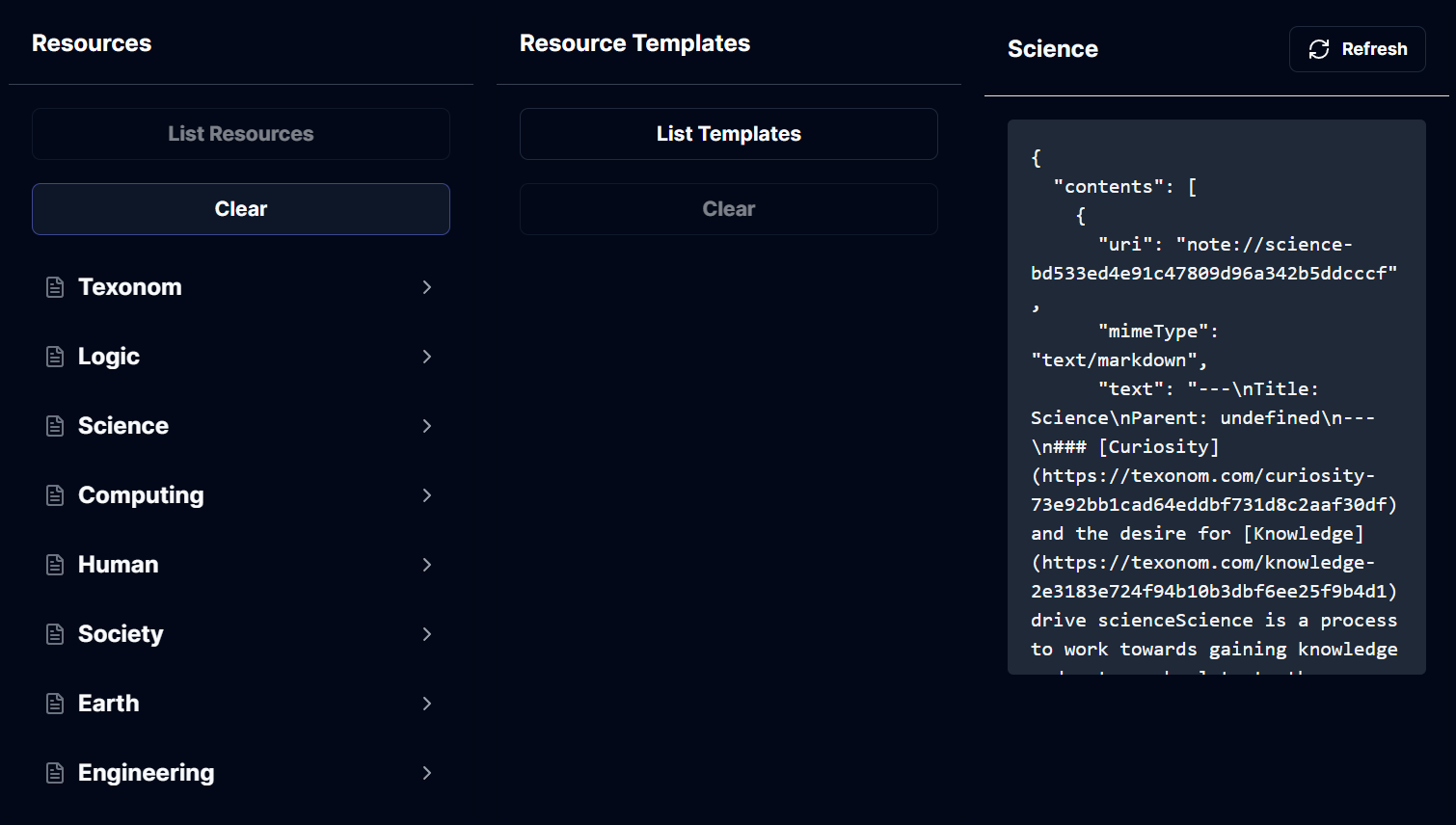
This TypeScript-based MCP server integrates with Notion to manage and interact with pages across a workspace. It allows users to list, retrieve, and search Notion pages as Markdown notes, and provides tools for summarizing, refactoring, and enhancing content. The server supports remote deployment and integrates with tools like Claude Desktop for seamless usage.

This repository is a collection of Medical MCP (Model Context Protocol) servers that facilitate secure interactions between AI models and medical resources such as PubMed, medRxiv, DICOM, and FHIR data. These servers extend AI capabilities by providing access to medical databases, API integrations, and contextual services, making them valuable tools for healthcare and research applications.
 Invite Gmail Contacts


