
All MCP Servers Complete list of MCP server implementations, sorted by stars
The Chain of Thought MCP Server leverages Groq's API to call LLMs, exposing raw chain-of-thought tokens from Qwen's qwq model. It is designed to enhance AI performance by enabling structured reasoning and verification steps, particularly in complex tool use scenarios. The server integrates seamlessly with MCP configurations, allowing AI agents to iteratively refine responses and improve decision-making processes.
This MCP server integrates with Groq's API to call LLMs, exposing raw chain-of-thought tokens from Qwen's qwq model. It enhances AI performance by enabling external 'think' tools, particularly useful in complex tool-use scenarios like those tested on SWE Bench. The server is designed to be easily configured and used with AI agents to improve reasoning and decision-making processes.

The Text-to-Speech MCP Server provides a text-to-speech service using the macOS 'say' command and the ElevenLabs API. It is designed to be used with the MCP protocol and supports tools like Claude Desktop and Cursor IDE. The server registers two tools: 'say' for macOS text-to-speech and 'elevenlabs' for ElevenLabs API integration, enabling voice output for text-based applications.
This MCP server facilitates reliable interactions between language models (LLM/SLM) and Apache Kafka, including its ecosystem tools like Kafka Connect, Burrow, and Cruise Control. It supports core Kafka APIs, excluding Streams, and provides REST API integrations for Burrow and Cruise Control. The server is designed to enhance the capabilities of language models by enabling them to perform tasks such as consuming, producing, and describing Kafka clusters, topics, and consumer groups.


The PineScript Trading Strategy MCP Server provides a comprehensive toolset for developing and managing trading strategies using TradingView PineScript. It includes features such as strategy creation, backtesting, performance analysis, and optimization. The project offers multiple UI options, including a Next.js web interface, an Express server, and an Electron desktop application, ensuring flexibility in deployment and usage.

This project provides a standardized way to interact with Harvest through the Model Context Protocol (MCP). It acts as a wrapper for the Harvest API, allowing MCP clients to seamlessly integrate with Harvest for time tracking and project management. The server is designed to simplify interactions with Harvest by adhering to the MCP format, making it easier to develop and maintain integrations.
This project provides a Model Context Protocol (MCP) server implementation specifically designed for Harvest, a time tracking and project management tool. It acts as a wrapper for the Harvest API, offering a standardized way for MCP clients to interact with Harvest. The server facilitates seamless integration and simplifies communication between Harvest and other systems through the MCP framework.

The Data Gouv MCP Server is designed to interact with the Data.gouv.fr API, specifically the API Recherche Entreprises, to retrieve up-to-date information about companies in France. It uses the HTTP+SSE transport defined in the Model Context Protocol (MCP) and provides features like searching for company details such as name, address, directors, and sector. The server is built with TypeScript and can be easily configured and debugged using tools like the MCP Inspector.
This repository hosts configurations and scripts for various MCP (Model Context Protocol) servers, facilitating the integration of external tools with language models such as Claude in Cursor. It includes setups for Firecrawl, Browser Tools, Supabase, Git, and more, enhancing the capabilities of AI-driven workflows.
This project is an MCP server designed to facilitate Unsplash image search integration. It uses the mark3labs/mcp-go library to provide a streamlined interface for searching and retrieving images from Unsplash. The server can be integrated into applications like Cursor, making it easy to add image search capabilities to your projects.
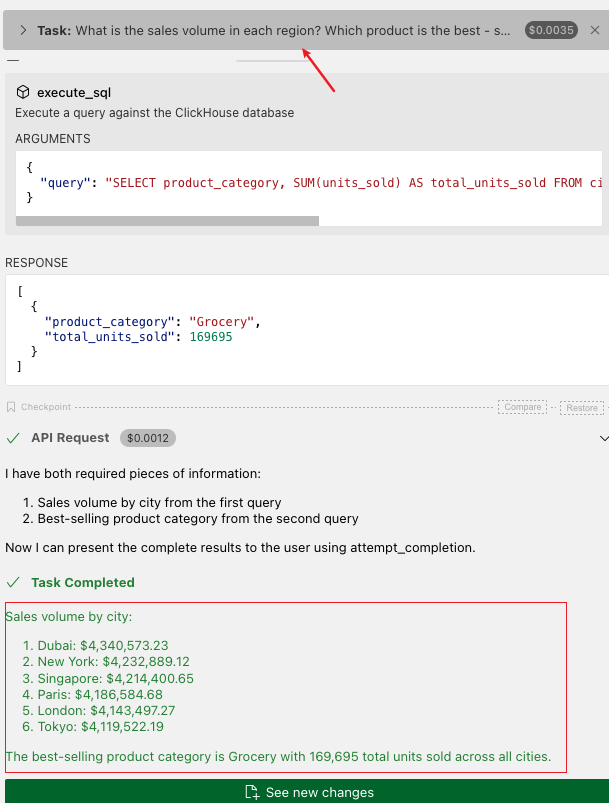
The ClickHouse MCP Server provides AI assistants with a secure and structured way to explore and analyze databases. It enables them to list tables, read data, and execute SQL queries through a controlled interface, ensuring responsible database access. The server can be configured via environment variables or command-line arguments, and it integrates with tools like VSCode and Cline for seamless usage.
This project is an Elixir-based implementation of the Model Context Protocol (MCP) server, designed to enable secure interactions between AI models and local or remote resources. It uses Server-Sent Events (SSE) as the transport protocol and includes tools like file listing, message echoing, and weather data retrieval. The server is built with Bandit and Plug, providing a lightweight and efficient solution for MCP-compliant applications.
This MCP server provides tools to interact with Microsoft Word documents, including reading and writing docx files, editing paragraphs, and inserting new content. It is designed to handle complex document structures, such as tables and images, and supports precise text manipulation within specific paragraphs. The server is built using Python and integrates with the Model Context Protocol (MCP) for seamless document processing workflows.

The Calculator MCP Server is designed to integrate with LLMs, providing a dedicated tool for precise numerical calculations. It supports a `calculate` function that evaluates mathematical expressions, ensuring accurate results. The server can be installed using `uv` or `pip` and configured to work seamlessly with MCP clients.
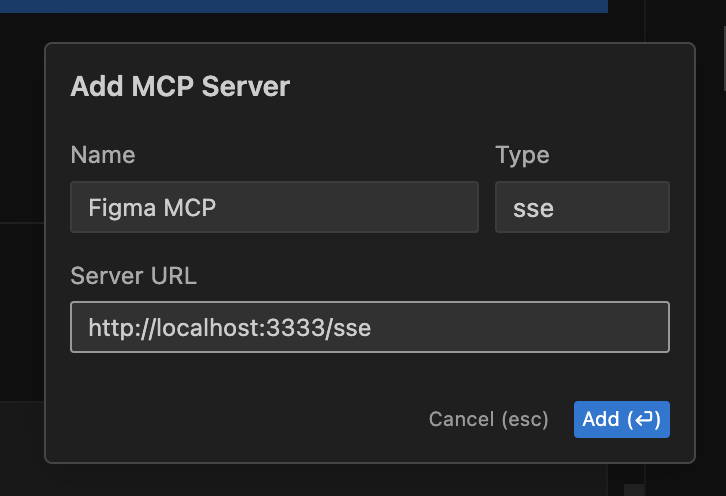
This MCP server integrates with Figma to provide AI coding agents, such as Cursor, with access to design data. It simplifies and translates Figma API responses to deliver only the most relevant layout and styling information, improving the accuracy and relevance of AI-generated code. The server supports tools like Cursor, Windsurf, and Cline, enabling seamless design-to-code workflows.
 Invite Gmail Contacts


