
All MCP Servers Complete list of MCP server implementations, sorted by stars

The CTF-MCP-Server project provides two Python-based servers: one for solving CTF puzzles (ctftools_Puzzle_server) and another for generating CTF challenges (ctftools_feces_making_machine_server). It integrates with AI tools to enhance the efficiency and creativity of CTF problem-solving and creation. The server can be configured using a JSON file, making it adaptable for various use cases.

This MCP server provides advanced HTTP request capabilities, including realistic browser emulation with accurate TLS/JA3/JA4 fingerprints, allowing models to interact with websites naturally and bypass anti-bot measures. It also supports converting PDF and HTML documents to Markdown for easier processing by large language models (LLMs). Features include comprehensive HTTP methods, browser fingerprinting, content handling, authentication support, and SSL security.
ZIP MCP Server is a compression and decompression tool based on the Model Context Protocol (MCP), leveraging fastMCP and zip.js. It provides fully parameter-controlled ZIP operations, including compression, decompression, and querying compressed package metadata. This tool is designed to integrate with AI clients, offering features like multi-file packaging, compression level control, password protection, and encryption strength settings.

This MCP server is designed to enhance reasoning capabilities within Cursor AI, specifically for interactions with Claude. It features advanced reasoning methods such as Monte Carlo Tree Search (MCTS), Beam Search, and Transformer-based reasoning, allowing for complex problem-solving and multi-step reasoning tasks. The server integrates seamlessly with Cursor AI, enabling users to leverage these tools directly in their workflows.


This Python template provides a foundation for developing Model Context Protocol (MCP) servers, focusing on efficiency and ease of use. It is tailored for AI-assisted development, offering a streamlined setup process and tools to enhance MCP server creation. The template is ideal for developers looking to integrate MCP functionality into their projects with minimal overhead.

The GitHub Enterprise MCP Server provides an interface to access and manage GitHub Enterprise resources such as repositories, issues, pull requests, and workflows through the Model Context Protocol (MCP). It supports integration with tools like Cursor and Claude Desktop, offering features like repository management, workflow automation, and enhanced error handling. Designed primarily for GitHub Enterprise Server environments, it also works with GitHub.com and GitHub Enterprise Cloud.

Blender Open MCP is a project that connects Blender with local AI models via Ollama, enabling natural language control over 3D modeling tasks. It uses the Model Context Protocol (MCP) for structured communication, supports basic 3D operations, and includes a Blender add-on for seamless integration. Optional PolyHaven integration allows downloading assets directly within Blender via AI prompts.
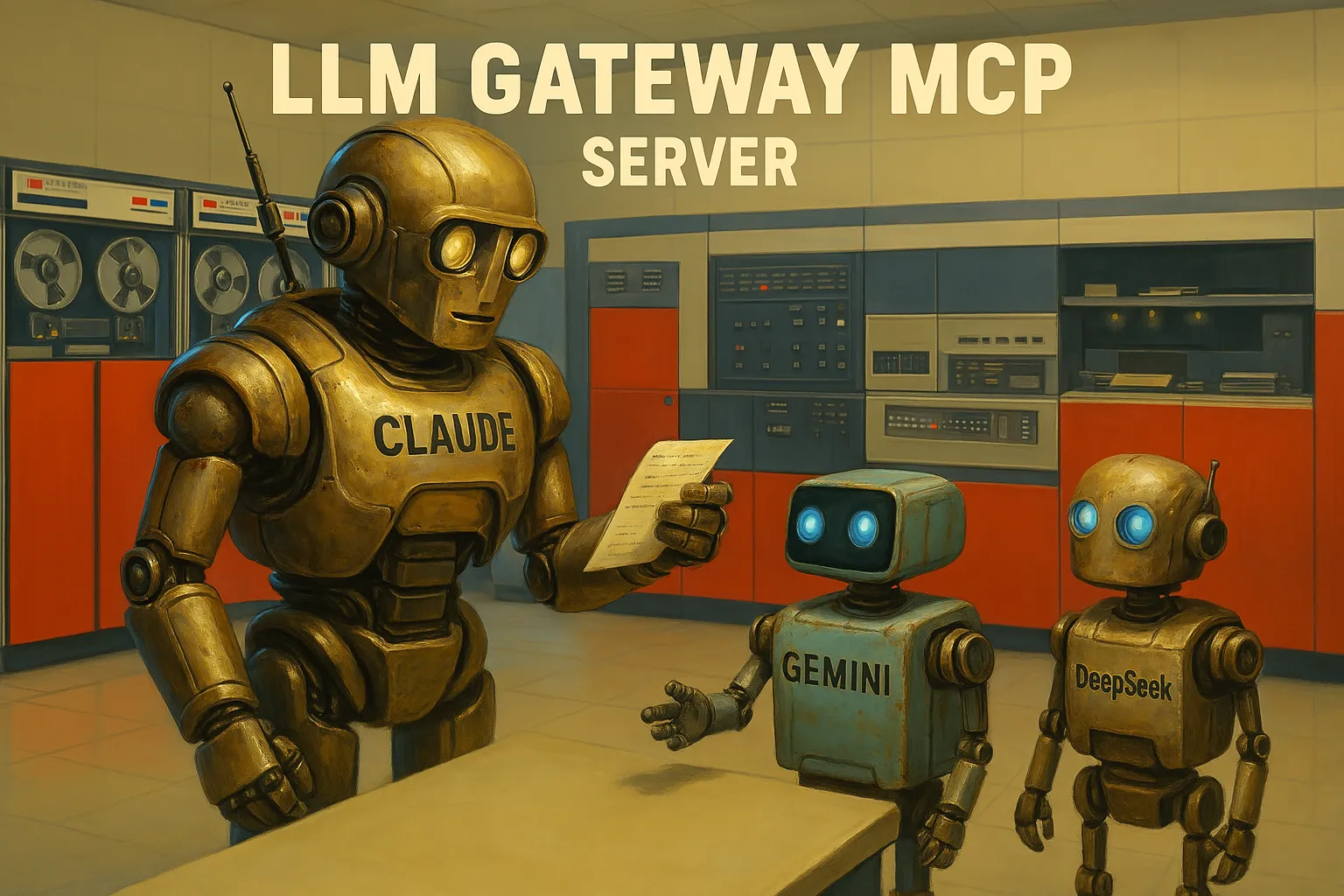
The LLM Gateway MCP Server facilitates intelligent task delegation from advanced AI agents such as Claude to more cost-effective language models like Gemini Flash. It provides a unified interface for multiple LLM providers, optimizing for cost, performance, and quality. The server is built on the Model Context Protocol (MCP), enabling seamless integration with AI agents and efficient workflows for tasks like document summarization, data extraction, and more.

The Google Scholar MCP Server provides a bridge between AI assistants and Google Scholar through the Model Context Protocol (MCP). It allows AI models to search for academic papers, retrieve metadata, and access author information programmatically. Key features include paper search, efficient retrieval, author information, and research support, making it a valuable tool for academic research and analysis.

This MCP server offers tools and resources to fetch and analyze the Crypto Fear & Greed Index, including current and historical data, trend analysis, and prompt generation. It integrates with MCP-compatible clients like Claude Desktop, making it easy to access and interpret cryptocurrency market sentiment.
The Memos MCP Server is designed to integrate with the Memos application using the Model Context Protocol (MCP). It provides functionalities such as searching and creating memos, making it easier to manage and interact with your notes programmatically. The server can be installed via Smithery and is configured to work with Claude Desktop, offering a seamless experience for users who rely on Memos for their note-taking needs.
This project is an experimental Python-based server that locally indexes codebases using ChromaDB and provides a semantic search tool via an MCP (Model Context Protocol) server. It is designed to integrate with tools like Cursor, allowing developers to perform semantic searches within their local projects. The server can be easily set up using Docker and configured to index specific project directories, enhancing the search capabilities of the Cursor IDE.
The Mailgun MCP Server is an implementation of the Model Context Protocol (MCP) designed to facilitate interaction between MCP-compatible AI clients, such as Claude Desktop, and Mailgun APIs. It allows users to send emails, fetch and visualize sending statistics, and more. The server is built with Node.js and supports seamless integration with Mailgun services, providing a robust solution for AI-driven email management.
 Invite Gmail Contacts


